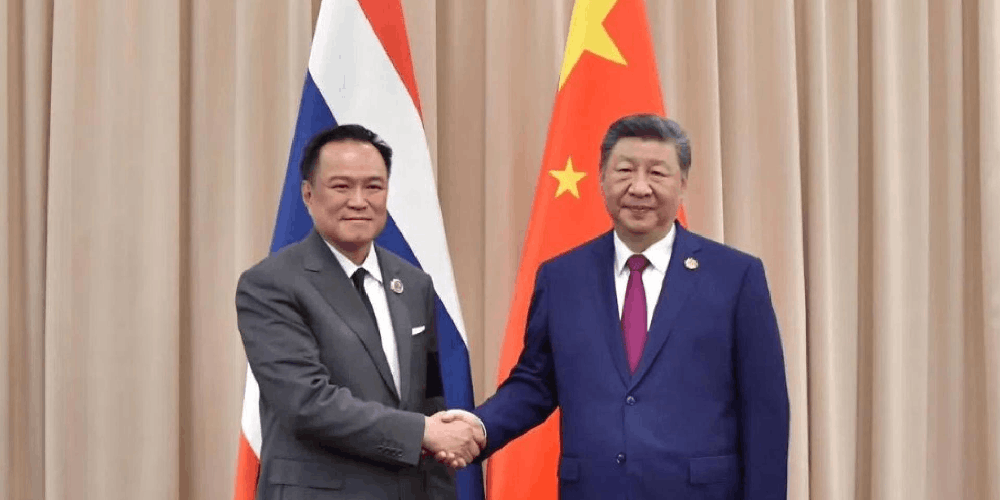
Following a second intervention in two years from President Xi Jinping, Thailand will not consider regulating casinos, no matter what it does to boost Chinese travel numbers.
As the connection between the two nations strengthens and anticipation increases for the revival of Chinese tourism to Thailand, Thailand’s prime minister, Anutin Charnvirakul, has guaranteed Jinping that the government will not move to legalize casinos.
Local sources say Jinping was said to be pleased with Charnvirakul’s promise not to seek casino control when the two met at last week’s Asia-Pacific Economic Cooperation (APEC) conference in South Korea.
Thailand had previously tried to increase wider tourism by bringing in casinos as part of integrated resorts. But the bill was scrapped earlier this year amid political difficulties that saw Charnvirakul replacing Paetongtarn Shinawatra as prime minister.
Shinawatra’s moves were fiercely resisted domestically and abroad, even by the Chinese president.
In February, Jinping cautioned against social problems that could occur if the country legalized control of casinos, especially a possible surge in criminality associated to the facilities.
Charnvirakul, since being inaugurated in as Prime Minister, has frequently denied the likelihood of gaming legislation returning under his leadership, most recently reversing a July decision to recognize poker as a sport.
The talks went well and there was a lot of mutual understanding. Jinping seemed more relaxed when he heard that the current Thai government had no plan to legalize casinos. "This means the Chinese government will support their citizens to visit Thailand with confidence," Mr Anutin told local media.
In a wider trend of falling tourism to Thailand, 2.26 million Chinese citizens traveled to the Southeast Asian nation in the first half of 2025, down 34% from 2024.
He said China might counsel its citizens against traveling to nations with policies different from China’s. Moves earlier this year to regulate casinos in Thailand may have made the country less attractive to visitors from China, where gambling is banned.
Thailand will look to China’s Premier for help as it tries to reclaim its status as a tourism hub in the face of competition from its Southeast Asian neighbors. Tourism accounts for about 12% of the country’s GDP, and the sector employs 20% of the Thai labor, directly and indirectly.
The pair also pledged help for cracking down on cross-border crimes such as internet gambling and telecom fraud, the Chinese Embassy in India said.